Monday, September 12, 2016

trip to Yantzaza and Emmett reading at Mass

sharing the pickup bed with bananas and sugar cane
Emmett and Annalise all ready for school 

view from our apartment rooftop


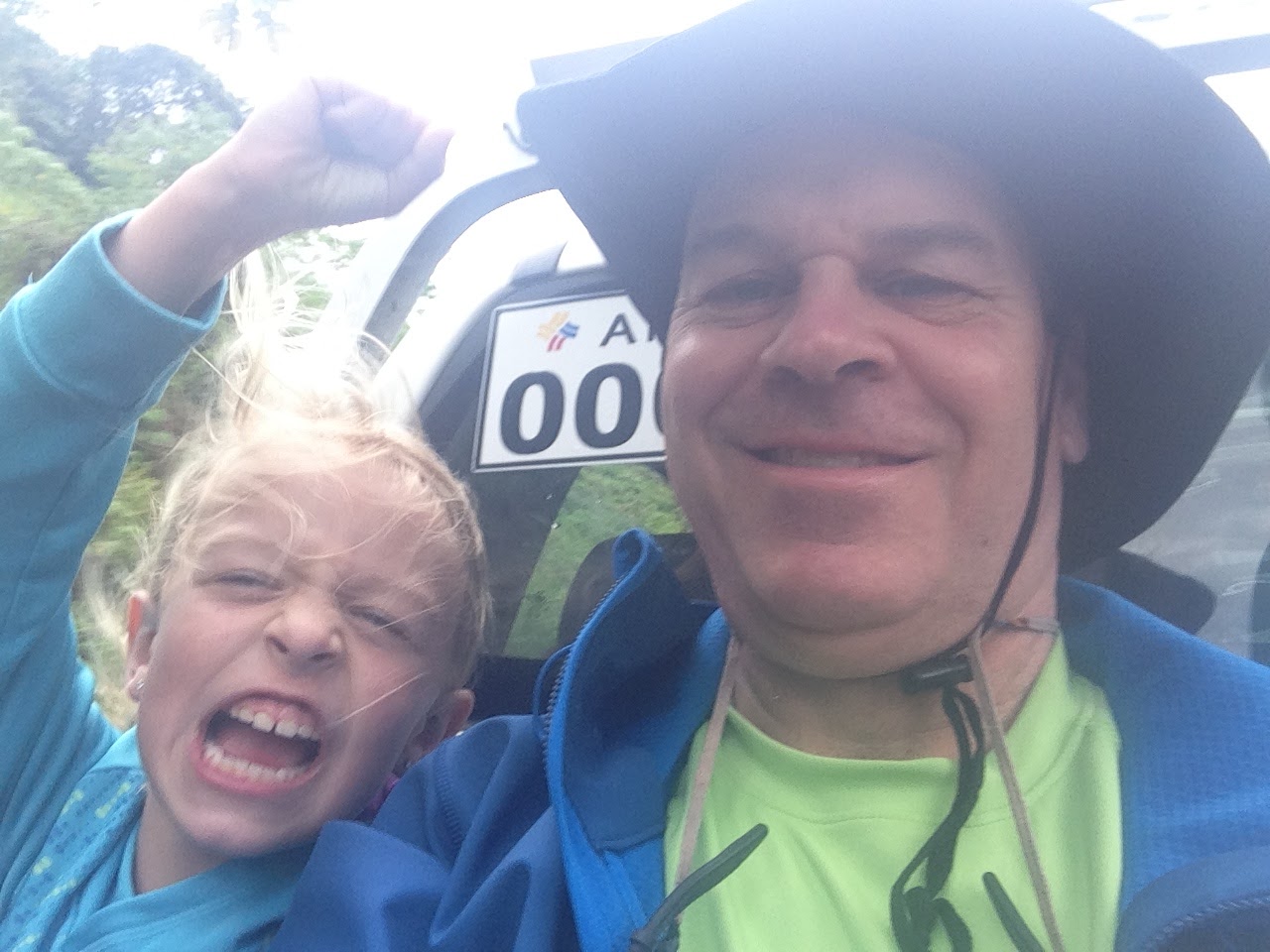
riding in the back of the pickup


intersection at Saquea

Emmett reading prayer petitions in Spanish during Mass on Sunday

shopping trip to Yantzaza

On Saturday all four of us travelled to Yantzaza to buy food and school shoes/clothes for Annalise and Emmett. The day was long and we were exhausted when we returned home 6 hours later.   The heat combined with the stress of managing so many new tasks and details really depleted our energy.  Our first leg of travel provides a glimpse of what can be exhausting but also adventurous.   We left the house at 9 AM and hailed a taxi to take us to the bus depot about 7 miles away.    The general understanding with taxistas is that if you request a ride to a particular destination you are responsible for the full price cab fare.   The customer who declares the ride's destination pays full fare and rides in comfort of the cab.   Often the taxista will pick up additional passengers (who are relegated to the  pickup bed more often than not).   Any "added-on" passengers pay the taxista the equivalent of bus fare, 50 cents.     So on Saturday morning I approached a taxista who had a nearly full cab and confirmed that he could give us ride to Saquea.   Saquea is located where two highways intersect and is used as a bus transfer station.   There are three shacks/stands which sell food but provide no shelter from sun or rain.    The taxista gestured that he would travel a short distance away, turn around and then drive us to Saquea.    Emmett, Annalise and I hopped in the back of the truck and Kate entered the cab.  The taxi drove about 2 miles in the opposite direction of our destination and then dropped off his other passengers.   He picked up some more along the way before we arrived at our original starting point.   At this point as we embarked on our journey I had some doubts about whether we would be considered full fare passengers.    While I was considering this situation in the windy pickup bed, we stopped for a man who jumped on board and brought along a large bunch of bananas and tied stalks of sugar cane.   I had previously met this man as he is a former boxer for the Ecuadorian national team.   Needless to say, riding in the pickup bed sharing space with bananas and sugar cane confirmed I was not paying full fare for our ride to Saquea.  

Saturday, September 10, 2016

Earthquake in Peru -- felt in Ecuador

This morning all four of us woke up at about 5am with our beds shaking -- not a whole lot, but enough to roust us all out of our sleep.  It didn't last long, and was only scary in that you never know if a quake is going to get worse before it gets better.  It just faded out without any other problems, and nobody even mentioned it today.

Since you almost certainly missed the breaking news, there was a pretty big earthquake in northern Peru early this morning.  It was a 6.0 magnitude quake at 5:08am that was apparently located in the sparsely populated Amazon region of Peru, and the epicenter was 70 miles underground.  The blue dot is where we are, and the red dot is where the earthquake was.  Reportedly there was no damage, even in Peru, from the quake.


We are waiting for the big one in the Seattle area too -- so we might as well be here as there, from an earthquake point of view.

Friday, September 9, 2016

Starting school at Inti Pakari

Emmett and Annalise started school this week, on Wednesday September 7th  -- coincidentally, the same day that our home Tacoma Public Schools started this year.  We chose a very small local school for them called Inti Pakari.  It is known as the "bilingual" school in town -- not Spanish / English bilingual, but Spanish / Quechua (sometimes spelled and pronounced Kichwa).  Quechua is one of the major indigenous languages spoken in multiple countries in the Andes region.  We chose this school not so much because we are dying for our kids to learn Quechua (though we certainly have nothing against it), but because of the intimate and family-oriented atmosphere, and a seemingly more creative approach to education.   There are only about 20-25 kids in the whole school, mainly from the local Saraguro ethnic group.  Our kids stand out not only because of their obvious blondness, but also because the Saraguro tend to be very short people -- and so our kids tower over them.

Here are our brave souls about to set out for their first day of school:


Ecuadorean school kids universally wear uniforms -- white shirt, black pants or skirt -- which we did not have yet.  The head teacher had told us not to worry about it, and to just show up on the first day of school -- she indicated that once we signed the kids up for school, the government would send their uniforms to the school for us to pick up.  But things don't work that smoothly.  So here are our kids gathered outside the school on the first day with their classmates.


They were not really going to "fit in" in any case, but they definitely stuck out like sore thumbs in their colorful clothes!  Here is a video of their classmates singing the Ecuadorean national anthem in Quechua.  Yes, the Landy kids were feeling a bit lost -- but got through it like champs.


I was anticipating them coming home from school feeling totally lost and confused and upset, but actually the did great.  Emmett said "I only had to say 'no entiendo' ('I don't understand') twice!"

Yesterday we finally found a store that has uniforms in town, they didn't have any in Annalise's size but they were able to make them for us overnight.  This morning they had a new look:


Cute!  The shirt are scratchy, so we need to get them some white t-shirts this weekend so they can wear them underneath.  It's funny that they had kind of been dreading having to wear uniforms -- but once you are the only one that is NOT wearing one, all you want is a uniform!

So far their actual school work is way below their abilities.  Annalise's homework last night was to write her name a bunch of times (which would have been appropriate for pre-K, but she is a very capable 2nd grader).  Emmett was answering math questions in class for the kids 2 grades ahead of him.  We will see how it goes -- mainly we want them to be in school to be immersed in Spanish, and to have a little school community that they can call their own.  We are supplementing them with their math books from their school in the US, and they are avid readers on their Kindles (a genius invention for this kind of year abroad).  I actually feel OK that their "work" is on the easy side, so they can focus on learning the language without being overwhelmed by new material.  But I also don't want them to be totally bored.  With time I think it will sort itself out.  For now, I am just so proud of these kids, and so impressed with how they are rolling with the punches with a smile.  Hats off to them!

church and rio pictures

procession in front of the church following communion and before mass finished

Annalise playing at the river

On Sundays people socialize at the river and food and beer is sold


Annalise thrilled to be riding in the back of a pickup truck coming home from the river

Banana tree next to the path leading to church and the medical clinic

Kate arranged for a local Saraguro women to teach Annalise how to make beaded jewelry  

Kate walking Emmett and Annalise to school on the first day of school.  


Sunday, September 4, 2016

School and community in Guadalupe

We moved to Guadalupe just short of 2 weeks ago.     Guadalupe seems vastly smaller than Quito and therefore a lot safer.    There are four main ethnic groups living in Guadalupe (five, if you count the four gringos featured in this blog).    Aside from traditional clothing worn by the locals, we really have not been able to distinguish different ethnic groups and everyone seems equally friendly.    Family kinship is integral to the lives of the people here.   There doesn't seem to be much of an economy other than subsistence that maintains the basic needs of food, shelter, clothing and some entertainment.     Extended family networks seem to ensure a social safety net, access to childcare and cooperation for all of the physical labor involved in agriculture and domestic animal care.  

Emmett and Annalise have made fast friends.    Both enjoy much more freedom than we would allow at home.    There is an ubiquitous presence of children and adults who know each other on the local streets. Emmett walks a mile with his friends to play in the river and really enjoys hanging out with his friends playing soccer in the covered concrete playground in the center of town.   Annalise has friends who braid her hair and with whom she goes to the community center for painting classes.    They both like to buy empanadas on their own from the lady who operates a cooking stand at the center of town.   After it gets dark I usually go outside and ask whomever where "Emmito" and "Annalisa" are and one of the kids will know where they are.  

It is hard not to feel integrated with the community here.   Most of the houses do not have windows so we hear whatever activities or music our neighbors are indulging in.    The neighborhood feels very lively.    Except for Sunday morning when some people seem more formally dressed in traditional clothing for church (especially the white embroidered blouses worn by Saraguro women and black hats and knee-length pants worn by Saraguro men) it is hard to distinguish weekends from workdays.   Even though on most days we hear music blaring until late at night, our neighbors still do their six am chores every morning.     Kate and I like to stroll through the neighborhood after dusk and enjoy the cool air.

Emmett and Annalise will start school next Wednesday.   We chose a small two-room school called, "Inta Pakari".     This school was founded to preserve and promote the "Quichua" culture.    Quichua is a native language spoken by various indigenous tribes and the Quichua themselves are an ethnic group rooted in agrarian culture.    Emmett and Annalise will have 1-2 hours of "Quichua" language/cultural education each day.  There is a lot of parent involvement at Inta Pakari (I helped paint the school for 4 hours yesterday).  We felt that the smaller school size would provide more individual attention for Emmett and Annalise.     Aside from the need to progress with math concepts, we really don't have any concern about our children falling behind their peers at home (we brought down Bryant school math curriculum workbooks).   We anticipate that Spanish skills and a year of foreign education will pay life-long dividends.    Our other choices included a large public school that we heard partially has an agricultural curriculum (Amanda, the clinic nurse, reported that students receive instruction on the use of machetes).    Last week we heard that the Ecuadoran school system is planning systemic changes to consolidate schools which may involve closing some schools and transporting rural students by bus which reinforced our preference for a smaller school.     The third choice was the one-room school located on the mission compound.    The mission school primarily serves Shuar children.    The Shuar primarily are a hunting and gathering culture and therefore do not seem to have such extended clan networks.    The local Mestizos children attend the local public school.    Mestizos make up most of the population in Ecuador and constitute the emerging middle class in urban Ecuador.  Historically the Mestizos have a mixed heritage of Spanish and native blood.

We are delighted with the hospitality everyone has shown us.      Since there are not many options to distract us (television, exercise/workout, take a car ride or go shopping) adapting to the rhythm of life here has been a blessing.    The climate and especially the humidity has helped me adjust to a slower pace and also helps to blunt my nervous energy to get things done.     The slower pace and how much longer some chores take seem to help the days go by quickly.    We are establishing a sense of routine and competence in meeting our basic needs.   Kate has been cooking delicious dinners with local ingredients and we are establishing a somewhat varied cupboard.    Shopping has been a learning curve.   On Friday I travelled to Yantzaza for a shopping trip.   The journey was 3+ hours round trip and entailed hitching a ride in taxi pick up truck bed to a corner bus depot (same price of a bus ride but more convenient, if you can flag a passing taxi); then transferring to a bus to get to Yantzaza terminal; then taking a $1 taxi ride to the supermarket and then the reverse to return home.

One feature as foreigners living amidst an economy without much technology or luxury is that we can afford to pay $30 per week for a local woman, Angelita, to do our laundry by hand and prepare lunch for us during the week when Kate works.   Each day Kate walks across the footbridge to join us  for lunch.    Angelita usually prepares delicious soups and a vegetable such as plantains.  .    We are told this salary very much benefits a local family and feels like a wonderful luxury for us.
Market held in the covered play court, "La Concha" which distributed produce to the elderly

chicks distributed at the market


Annalise and her friend, Paula

early morning scene outside our apartment.  if you look closely you can see a large kettle over a fire
the truck equipped with a speaker system that blared outside of our apartment building at 6 am

School and community in Guadalupe

We moved to Guadalupe just short of 2 weeks ago.     Guadalupe seems vastly smaller than Quito and therefore a lot safer.    There are four main ethnic groups living in Guadalupe (five, if you count the four gringos featured in this blog).    Aside from traditional clothing worn by the locals, we really have not been able to distinguish different ethnic groups and everyone seems equally friendly.    Family kinship is integral to the lives of the people here.   There doesn't seem to be much of an economy other than subsistence that maintains the basic needs of food, shelter, clothing and some entertainment.     Extended family networks seem to ensure a social safety net, access to childcare and cooperation for all of the physical labor involved in agriculture and domestic animal care.  

Emmett and Annalise have made fast friends.    Both enjoy much more freedom than we would allow at home.    There is an ubiquitous presence of children and adults who know each other on the local streets. Emmett walks a mile with his friends to play in the river and really enjoys hanging out with his friends playing soccer in the covered concrete playground in the center of town.   Annalise has friends who braid her hair and with whom she goes to the community center for painting classes.    They both like to buy empanadas on their own from the lady who operates a cooking stand at the center of town.   After it gets dark I usually go outside and ask whomever where "Emmito" and "Annalisa" are and one of the kids will know where they are.  

It is hard not to feel integrated with the community here.   Most of the houses do not have windows so we hear whatever activities or music our neighbors are indulging in.    The neighborhood feels very lively.    Except for Sunday morning when some people seem more formally dressed in traditional clothing for church (especially the white embroidered blouses worn by Saraguro women and black hats and knee-length pants worn by Saraguro men) it is hard to distinguish weekends from workdays.   Even though on most days we hear music blaring until late at night, our neighbors still do their six am chores every morning.     Kate and I like to stroll through the neighborhood after dusk and enjoy the cool air.

Emmett and Annalise will start school next Wednesday.   We choose a small two-room school called, "Inta Pakari".     This school was founded to preserve and promote the "Quichua" culture.    Quichua is a native language spoken by various indigenous tribes and the Quichua themselves are an ethnic group rooted in agrarian culture.    Emmett and Annalise will have 1-2 hours of "Quichua" language/cultural education each day.  There is a lot of parent involvement at Inta Pakari (I helped paint the school for 4 hours yesterday).  We felt that the smaller school size would provide more individual attention for Emmett and Annalise.     Aside from the need to progress with math concepts, we really don't have any concern about our children falling behind their peers at home (we brought down Bryant school math curriculum workbooks).   We anticipate that Spanish skills and a year of foreign education will pay life-long dividends.    Our other choices included a large public school that we heard partially has an agricultural curriculum (Amanda, the clinic nurse, reported that students receive instruction on the use of machetes).    Last week we heard that the Ecuadoran school system is planning systemic changes to consolidate schools which may involve closing some schools and transporting rural students by bus which reinforced our preference for a smaller school.     The third choice was the one-room school located on the mission compound.    The mission school primarily serves Shuar children.    The Shuar primarily are a hunting and gathering culture and therefore do not seem to have such extended clan networks.    The local Mestizos children attend the local public school.    Mestizos make up most of the population in Ecuador and constitute the emerging middle class in urban Ecuador.  Historically the Mestizos have a mixed heritage of Spanish and native blood.

We are delighted with the hospitality everyone has shown us.      Since there are not many options to distract us (television, exercise/workout, take a car tide or go shopping) adapting to the rhythm of life here has been a blessing.    The climate and especially the humidity has helped me adjust to a slower pace and also helps to blunt my nervous energy to get things done.     The slower pace and how much longer some chores take seem to help the days go by quickly.    We are establishing a sense of routine and competence in meeting our basic needs.   Kate has been cooking delicious dinners with local ingredients and we are establishing a somewhat varied cupboard.    Shopping has been a learning curve.   On Friday I travelled to Yantzaza for a shopping trip.   The journey was 3+ hours round trip and entailed hitching a ride in taxi pick up truck bed to a corner bus depot (same price of a bus ride but more convenient, if you can flag a passing taxi); then transferring to a bus to get to Yantzaza terminal; then taking a $1 taxi ride to the supermarket and then the reverse to return home.  

One feature as foreigners living amidst an economy without much technology or luxury is that we can afford to pay $30 per week for a local woman, Angelita, to do our laundry by hand and prepare lunch for us during the week when Kate works.   Each day Kate walks across the footbridge to join us  for lunch.    Angelita usually prepares delicious soups and a vegetable such as plantains.  .    We are told this salary very much benefits a local family and feels like a wonderful luxury for us.
Market held in the covered play court, "La Concha" which distributed produce to the elderly

chicks distributed at the market


Annalise and her friend, Paula

early morning scene outside our apartment.  if you look closely you can see a large kettle over a fire
the truck equipped with a speaker system that blared outside of our apartment building at 6 am