Friday, April 14, 2017

Gold mine in Nambija

Padre Jorge was kind enough to take us on another fun outing -- this time to a working gold mine in the town of Nambija, about 90 minutes away.  The two main industries in our province seem to be agriculture and gold mining.  I had always assumed that the mining was a government enterprise, but it turns out there are just lots of small individual mines up in the mountains, with widely varying safety standards.

As we were entering the town of Nambija, there were these hoses everywhere.


It turns out that every individual mine needs its own constant water supply, and they have rigged up all these hoses that branch off to the different mines.  I guess underground plumbing is too complicated and expensive...

One of Padre Jorge's fellow priests in the area, Padre René, knew of a particularly safe and well-run mine.  He called they guy in charge of it, who agreed to show us around.
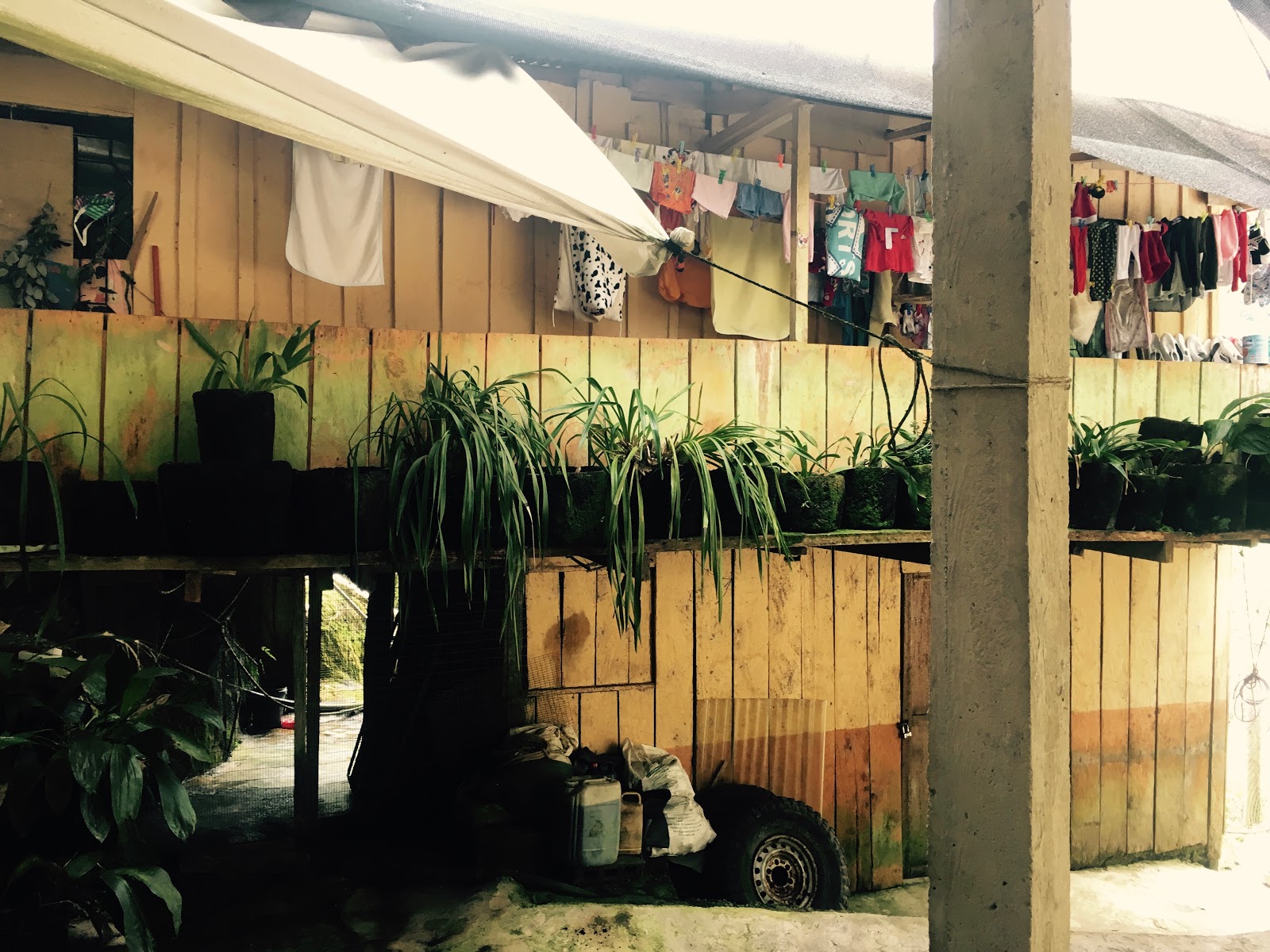
The home of the family who runs the mine -- on the premises 
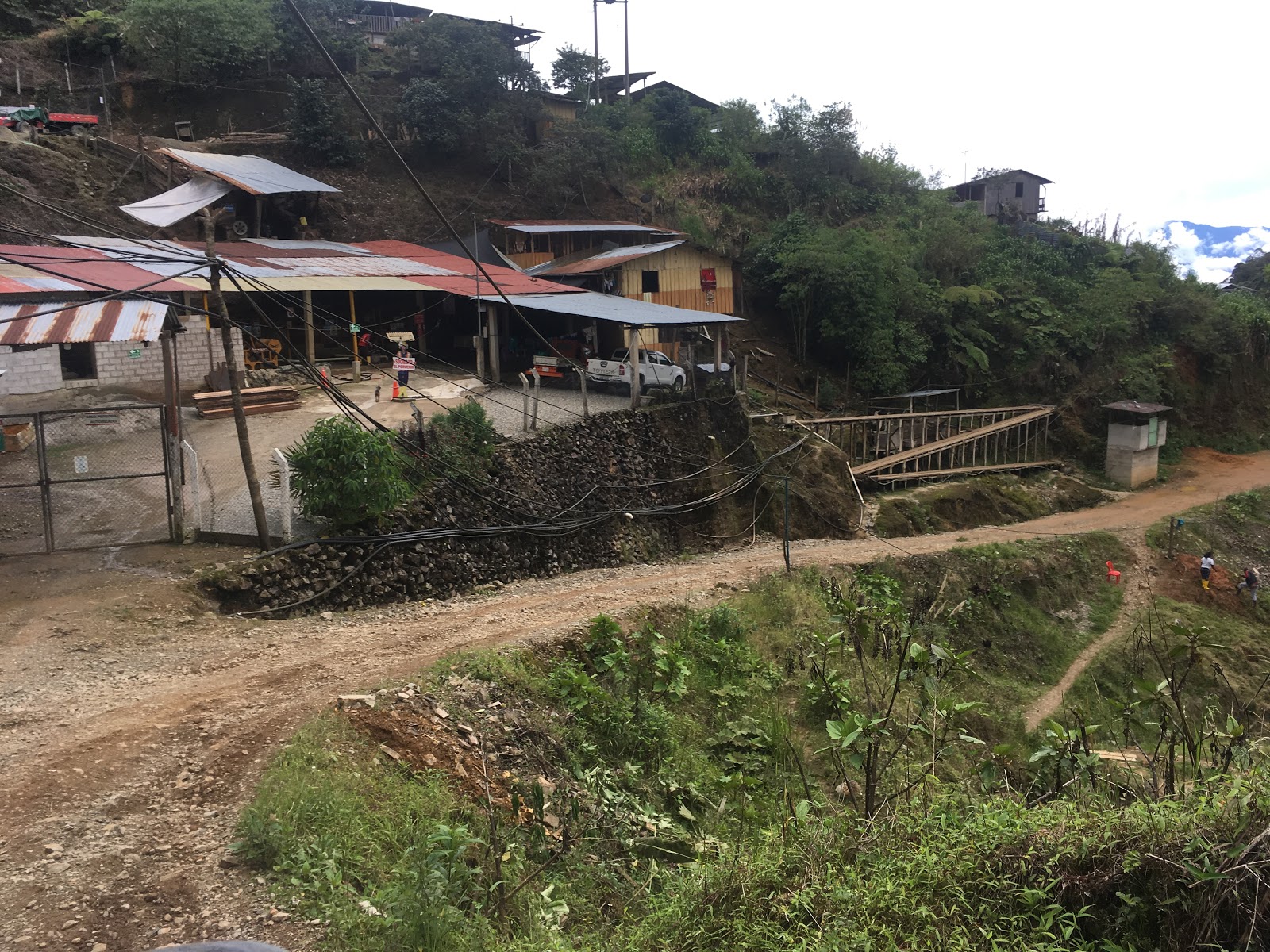
The entrance to the machinery part of the mine, where they mill the rocks and extract the gold.  The above yellow house is toward the right.


This nice man named Clever owns the mine, and has been working in mining since he was a very young man.   He pays attention to safety, and reportedly runs the safest mine around.  He led us up to the entrance of the mining tunnel. above the buildings.


This is the entrance to the tunnel, which leads deep into the mountain.   It is big enough to drive a small vehicle through, and tall enough that we tall gringos could walk pretty much upright.


It is quite dark in the tunnel, but there is safety lighting.  There are really no visible seams or chunks of gold -- evidently there used to be, but much of that has been dug out.


As a point of comparison, Clever said that this is the typical size of a mining tunnel in the area.  It is barely big enough to crouch in.   Over the months I have seen a number of miners in the clinic, many of them with back pain -- and one can understand why.  It is tough work -- but people do it because it provides a regular paycheck, which can be hard to come by.


After the rocks are dug out, they are pushed down the hill to the buildings below, where they are ground into very fine sand, and small amounts of gold are extracted from the ore using a somewhat complicated system that I don't really understand. 


 It is very hard work for not a tremendous monetary reward.  But these folks are ever hopeful that there is much more gold in these mountains than meets the eye.  It was a super interesting place to see.

Thursday, April 13, 2017

Sugar cane press

One Saturday morning we wandered up to the home of our beading teacher up in the hills -- the same family that has let Emmett ride their horse before.  The dad of the family was busy pressing sugar cane into juice -- complete with a horse tethered to a wooden log, turning the press and extracting the sugar cane juice.  It seemed like it could have been a scene from 100 years ago.

José is feeding the sugar cane into the press, and a stream of juice is coming out the right side unto a bucket.  There are several full buckets already.  He has a big pile of cane to his left, and the pressed fibers to his right.  They use the juice to make "panela," which is sort of like the brown sugar that we have in the States -- but not quite as soft.

Here is the REALLY big pile of harvested cane.  I suspect the neighbors all pool their crops and share the equipment to get the job done.

If you have never tried fresh sugar cane juice with lime, you are missing out.  Just saying.

Thursday, March 23, 2017

recent Guadalupe pictures


local children bringing machetes to school.  There must have been a special project at school involving machetes

riding his bike to school while carrying a machete

chlildren getting ready for an school ethnic healthcare event at the concha 

Emmett, Alondra, Paul and Annalise waiting for the healthcare event to start 


Emmett's schoolmates and teacher, Berta, working on beaded jewelry projects 


Emmett, Annalise and classmates getting a ride back from healthcare event to their school 

a large bucket of grilled "cuy" to go, sold in town  (grilled guinea pig, tastes like chicken legs)


Cuy, is an Ecuadorian delicacy


Tuesday, March 14, 2017

Emmett and John visit a finca

This past Saturday Emmett and John visited the house of some friends outside our town of Guadalupe.    Before the government assisted with building cinderblock homes closer to town, most families resided outside of central Guadalupe in houses constructed of wood.    Many people maintain their country house or "finca" as a base for maintaining their gardens and livestock on land that surrounds their finca.   Many families still do not reside in a barrio (neighborhood) closer to town because they live closer to the farming and planting that is their livelihood and sustenance.   Often older people continue to live in fincas and typically only come to town on Sundays for church and market.    On Saturday, Emmett rode on our friends' horse and John walked about 40 minutes to visit the family of Jose and Mercedes.   They live in a finca which does not have electricity.   They have running water but the children bathe in the local creek.   Jose and Mercedes have 12 children but some of the older children are married and live in town.      Jose works as a groundskeeper for the Catholic mission so Emmett and Annalise often play with his children.    Mercedes has been teaching Annalise, Emmett and Kate how to make traditional Saraguro beaded jewelry.
Jonder leading the Emmett and Jorge on the horse

greenhouse to help keep the plants from getting too wet

another neighboring finca


outside the entrance to our friend's finca


Jose, who built the finca with his sons.   All of the wood for the house was cut by chainsaw and machete on his land 

Everyone tried to get on the horse 


descending to the creek

the creek below is where the family bathes. 

look at the saddle, made of rebar and wood, placed on folded grain bags


neighboring finca


Emmett and Rosita


Jonder standing on the horse to pick fruit (in his underwear after swimming)


Emmett and Jonder on the way back to Guadalupe

view from the inside of a truck that I hitched a ride back to town in

Later on Saturday Emmett playing soccer with a coach who is forming a new soccer team in town 

Emmett and the soccer players after soccer practice 

Annalise's birthday

Annalise turned eight years old in early March.    Kate made chocolate chip cookies for Annalise to share with her classmates at Inti Pakari.  
Annalise, Leidy and Emmett (with the bowl of cookies)


Annalise's classmates gave her some fresh-picked flowers for her birthday 


Annalise's special braids for her birthday 

Annalise and Alondra playing at the concha by their school 

Alondra, Annalise and Angeles 

Friday, March 10, 2017

church in Yucuambi


Vela de Novia Cacada

On the Monday during Carnival holiday, Padre Jorge took us to Yucuambi, a county capital located north of Guadalupe.  We stopped at the waterfalls, Vela de Novia or, "Veil of the Bride".   


there was lots of spray at the bottom of the waterfalls

Kate, Annalise and Emmett and Padre Jorge on the bench 


climbing back down from the waterfalls